Glossary

Key terms in commercial and industrial battery storage, explained in a few sentences. From peak shaving to sodium-ion cells.

Thank you! Your submission has been received!
Oops! Something went wrong while submitting the form.
Software & BMS

AI-Driven Energy Management

AI-driven energy management uses machine learning algorithms to automatically optimize a battery storage system's charging and discharging decisions.

Also:

AI Energy Management, Predictive Energy Management, Predictive Control
Software / BMS
A
Products

Air Cooling

Air cooling is a thermal management approach for battery storage systems in which fans or air conditioning units cool the battery cells using ambient air.

Also:

Products
A
Resilience

Backup Generator

A backup generator produces electricity through a combustion engine, typically diesel, to bridge the gap during a power outage.

Also:

Diesel Generator, Standby Generator
Resilience
B
Technology & Safety

Battery Fire Safety

Battery fire safety encompasses all structural, technical, and organizational measures that minimize a battery storage system's fire risk and limit damage if…

Also:

Fire Protection Concept
Technology & Safety
B
Software & BMS

Battery Management System (BMS)

A battery management system (BMS) monitors and controls the state of individual battery cells, including charge level, temperature, and voltage, and protects…

Also:

Battery Management System, Cell Management System
Software / BMS
B
Products

Battery Storage

A battery storage system stores electricity and releases it on demand, for example to use self-generated solar power at a later time, avoid costly demand…

Also:

Battery Storage System, BESS (Battery Energy Storage System), C&I Storage, Stationary Storage
Products
B
Use Cases

Behind-the-Meter

Behind-the-meter (BTM) refers to energy assets, such as battery storage or solar, installed on the customer's side of the electricity meter, typically…

Also:

BTM, Behind the Meter Storage
Use Cases
B
Resilience

Blackout Preparedness

Blackout preparedness refers to the forward-looking planning and technical preparation businesses undertake for a possible extended power outage.

Also:

Resilience
B
Use Cases

Charging Park

A charging park brings together multiple EV charging points at one location, similar to a traditional gas station, often equipped with fast chargers for…

Also:

Charging Hub
Use Cases
C
Resilience

Critical Infrastructure

Critical infrastructure refers to facilities and systems that are essential for public services, the economy, and public safety, for example in energy…

Also:

Critical Infrastructure Protection, Critical Facilities
Resilience
C
Software & BMS

Cycle Life

Cycle life indicates how many complete charge and discharge cycles a battery storage system can undergo before its capacity drops to a defined threshold…

Also:

Cycle Count, Cycle Lifespan
Software / BMS
C
Peak Shaving & Demand Charges

Demand Charge Management

In the US, demand charges are fees utilities add to a commercial or industrial customer's bill based on the highest amount of power drawn during a billing…

Also:

Demand Charges
Peak Shaving / Demand Charges
D
Software & BMS

Depth of Discharge (DoD)

Depth of discharge (DoD) indicates what percentage of a battery storage system's total capacity was actually used in a given cycle: discharging 90 kWh from a…

Also:

DoD
Software / BMS
D
Technology & Safety

Energy Density

Energy density indicates how much energy a battery can store relative to its weight (gravimetric, in Wh/kg) or its volume (volumetric, in Wh/l).

Also:

Gravimetric Energy Density, Volumetric Energy Density
Technology & Safety
E
Resilience

Energy Independence

Energy independence refers to the extent to which a business can meet its energy needs without relying on external suppliers or the public grid, for example…

Also:

Resilience
E
Software & BMS

Energy Management System (EMS)

An energy management system (EMS) is a software-based control system that automatically optimizes energy flows between generation, storage, loads…

Also:

EMS, Energy Management
Software / BMS
E
Resilience

Energy Resilience

Energy resilience refers to a business's ability to withstand disruptions to its energy supply and recover quickly, for example from power outages, extreme…

Also:

Resilience
E
Peak Shaving & Demand Charges

Energy Trading (Arbitrage)

Energy trading (arbitrage) refers to deliberately taking advantage of fluctuating electricity prices: battery storage charges when electricity is cheap (for…

Also:

Arbitrage, Energy Arbitrage
Peak Shaving / Demand Charges
E
Use Cases

EV Charging Infrastructure

EV charging infrastructure includes all the equipment needed to charge electric vehicles, from individual charging points to entire charging hubs.

Also:

Charging Hub, Charging Infrastructure
Use Cases
E
Technology & Safety

Fire Safety Requirements (NFPA 855)

In the US, fire safety for battery storage systems is governed primarily by the NFPA 855 fire code and UL 9540A testing standard, which set requirements for…

Also:

NFPA 855, Fire Code Compliance
Technology & Safety
F
Peak Shaving & Demand Charges

Frequency Regulation

Frequency regulation is reserve capacity that grid operators hold to correct imbalances between generation and consumption and keep grid frequency at its…

Also:

Regulation Service, Ancillary Services
Peak Shaving / Demand Charges
F
Use Cases

Front-of-the-Meter

Front-of-the-meter (FTM) refers to energy assets operated on the grid side of the electricity meter, typically large, grid-connected battery storage systems…

Also:

FTM
Use Cases
F
Use Cases

Grid Connection

A grid connection is the technical and contractual link between a building or facility and the public electricity grid, with a maximum connection capacity set…

Also:

Grid Interconnection, Connection Capacity
Use Cases
G
Use Cases

Grid Expansion

Grid expansion refers to the systematic buildout of electricity grid infrastructure, such as new lines, substations, or reinforced capacity.

Also:

Use Cases
G
Peak Shaving & Demand Charges

Grid Optimization

Grid optimization refers to optimizing how a business interacts with the electricity grid, with the goal of lowering costs, reducing grid strain, and…

Also:

Peak Shaving / Demand Charges
G
Technology & Safety

LFP (Lithium Iron Phosphate)

LFP (lithium iron phosphate) is a lithium-ion cell chemistry with iron phosphate as the cathode material and currently the most widely used chemistry in…

Also:

LiFePO4
Technology & Safety
L
Products

Liquid Cooling

Liquid cooling is a thermal management approach for battery storage systems in which coolant circulates through cold plates or channels along the battery…

Also:

Products
L
Technology & Safety

Lithium-Ion Battery

A lithium-ion battery stores electrical energy using lithium ions and is today's most widely used battery technology, from smartphones to electric vehicles…

Also:

Li-ion Battery, Lithium Battery
Technology & Safety
L
Peak Shaving & Demand Charges

Load Management

Load management refers to the deliberate control of a business's electricity consumption to avoid demand spikes or adjust consumption to grid and price signals.

Also:

Demand-Side Management, Load Shifting
Peak Shaving / Demand Charges
L
Use Cases

Microgrid

A microgrid is a spatially defined energy system that combines multiple generation sources, storage, and loads (for example across a company site) and…

Also:

Island Mode, Islanded System
Use Cases
M
Peak Shaving & Demand Charges

Peak Shaving

Peak shaving refers to deliberately reducing short-term consumption spikes to lower demand or capacity charges.

Also:

Demand Peak Reduction
Peak Shaving / Demand Charges
P
Resilience

Power Outage

A power outage is a partial or complete loss of electrical power, often caused by severe weather, equipment failure, or grid overload.

Also:

Blackout, Power Failure
Resilience
P
Software & BMS

Round-Trip Efficiency

Round-trip efficiency indicates what percentage of the energy used to charge a battery storage system is actually available again during discharge.

Also:

Round-Trip Energy Efficiency
Software / BMS
R
Technology & Safety

Salt Battery

In English, “salt battery” specifically refers to an older battery technology using molten salt as the electrolyte, also known as a ZEBRA or…

Also:

Technology & Safety
S
Resilience

Security of Supply

Security of supply refers, at the system or grid level, to the ability to reliably provide enough electricity to keep supply and demand in balance.

Also:

Resilience
S
Peak Shaving & Demand Charges

Self-Consumption Optimization

Self-consumption optimization refers to measures that help businesses use as much of their self-generated energy (for example from solar) as possible…

Also:

Self-Consumption, Solar Self-Consumption
Peak Shaving / Demand Charges
S
Technology & Safety

Sodium-Ion Battery

A sodium-ion battery stores energy using sodium, which is available worldwide and is the sixth most abundant element in the Earth's crust.

Also:

Sodium Ion Battery, Na-ion Battery
Technology & Safety
S
Software & BMS

State of Charge (SoC)

State of Charge (SoC) indicates how much energy is currently stored in a battery storage system relative to its maximum capacity, usually expressed as a…

Also:

SoC
Software / BMS
S
Software & BMS

State of Health (SoH)

State of health (SoH) describes the current condition of a battery cell or storage system compared to its original state, usually expressed as a percentage…

Also:

SoH
Software / BMS
S
Technology & Safety

Thermal Runaway

Thermal runaway describes an uncontrolled chain reaction inside a battery cell, where rising temperature releases more and more heat and the process…

Also:

Battery Thermal Runaway
Technology & Safety
T
Technology & Safety

Thermal Stability

Thermal stability describes how resistant a battery cell is to rising temperatures before chemical decomposition processes begin that can lead to thermal…

Also:

Technology & Safety
T
Resilience

Uninterruptible Power Supply (UPS)

An uninterruptible power supply (UPS) bridges a power outage for a few seconds to minutes without any noticeable delay, for example to shut down servers…

Also:

UPS System, Uninterruptible Power System
Resilience
U

No term matches your search.

Show all terms

Articles

All articles
Scaling Smarter: How PHENOGY Is Moving into Series Production
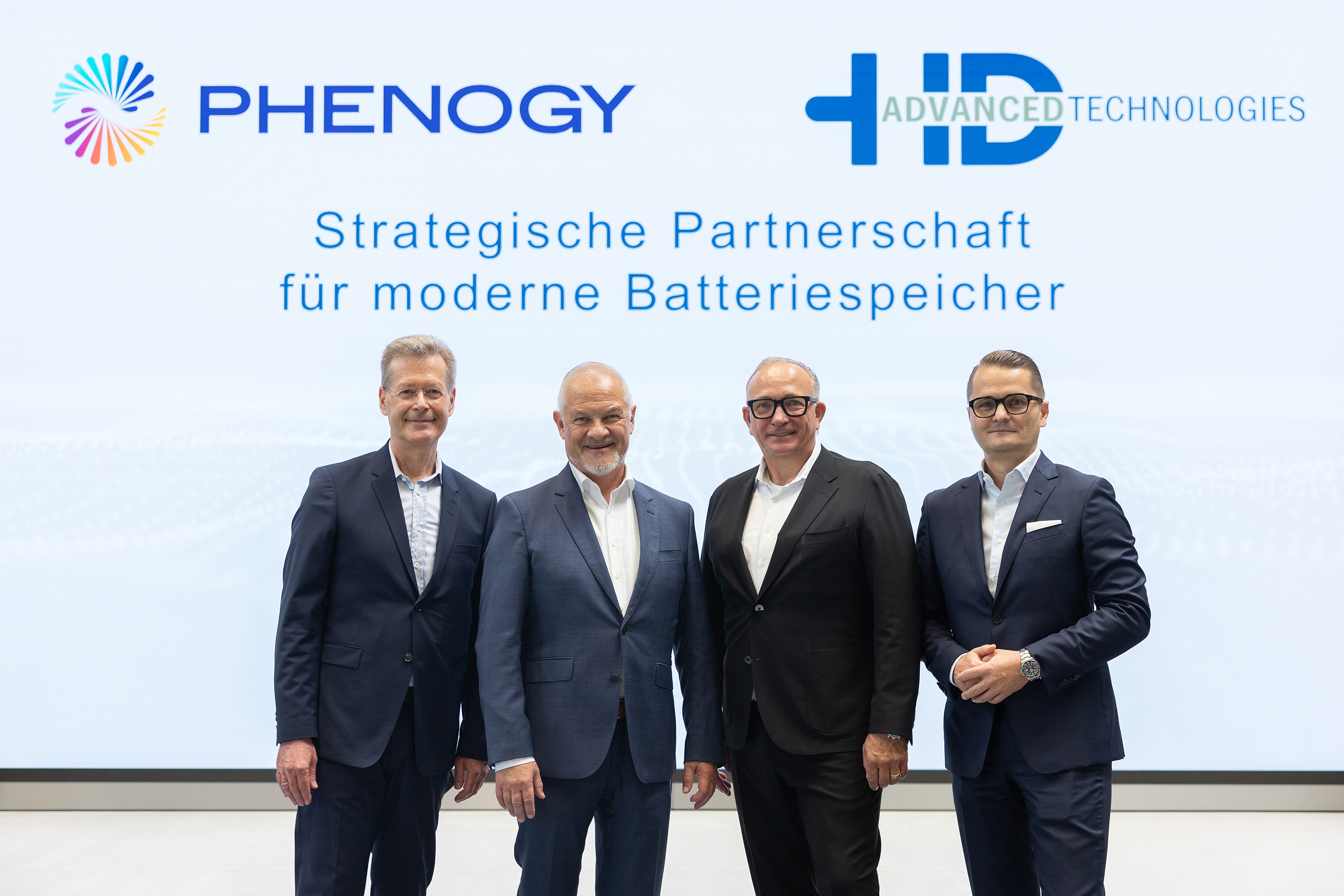
Representatives of PHENOGY and HDAT at the announcement of their strategic partnership for battery storage
Article
Energy Market & Policy
Company & Team
12.10.2026

Scaling Smarter: How PHENOGY Is Moving into Series Production

Together with our partner HDAT, we are bringing battery energy storage systems to market.

Marcel Kloppenburg
Chief Marketing Officer
7 Reasons PHENOGY Became the First Sodium-Ion Winner
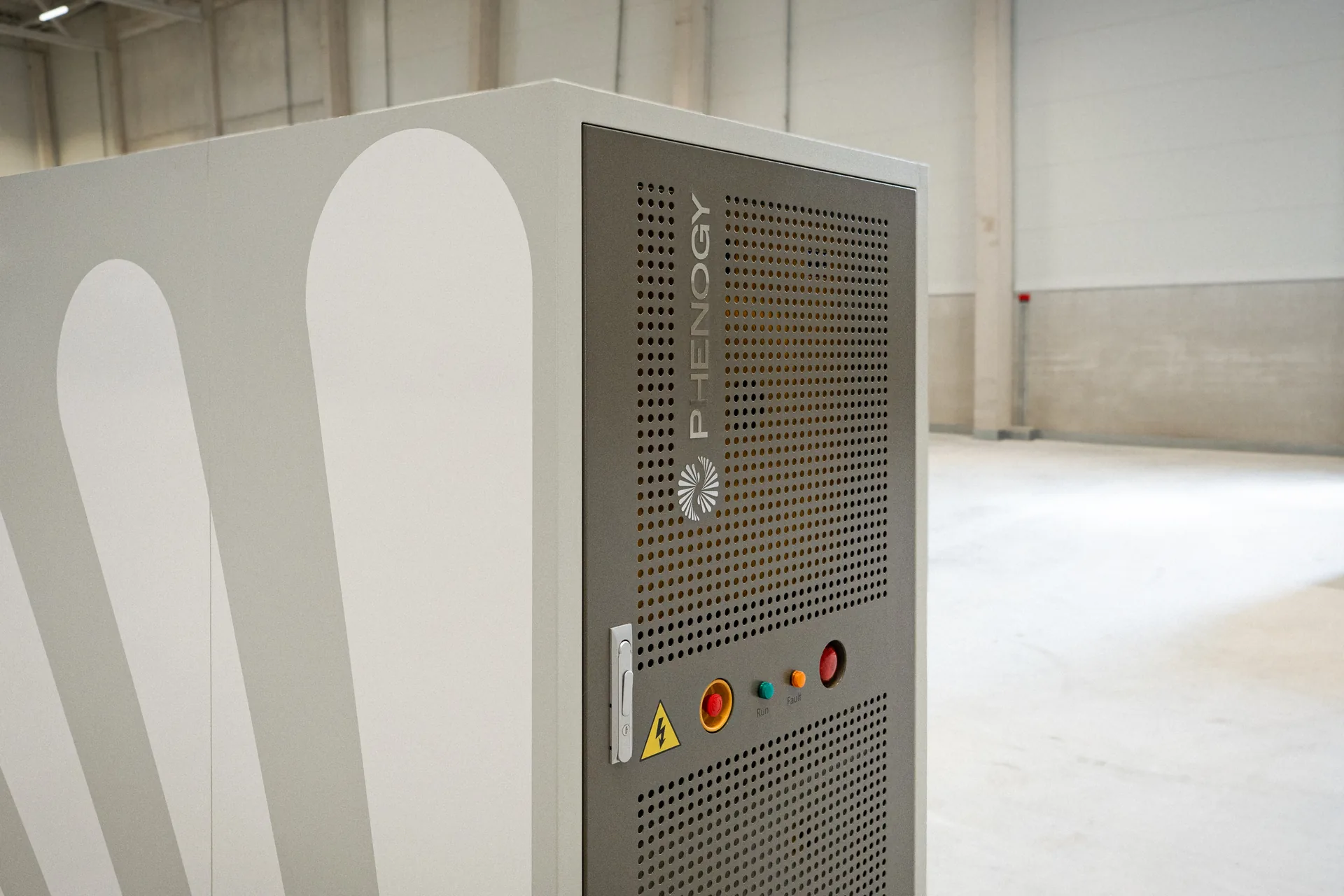
Close-up of a PHENOGY battery cabinet showing the ventilation panel and control buttons
Article
Events & Awards
Sodium-Ion Technology
PHENOGY Series 1
15.07.2026

7 Reasons PHENOGY Became the First Sodium-Ion Winner
Sustainable, Safe, and Proven in Practice

Marcel Kloppenburg
Chief Marketing Officer
Smarter E AWARD: Why PHENOGY Became the First Sodium-Ion Winner
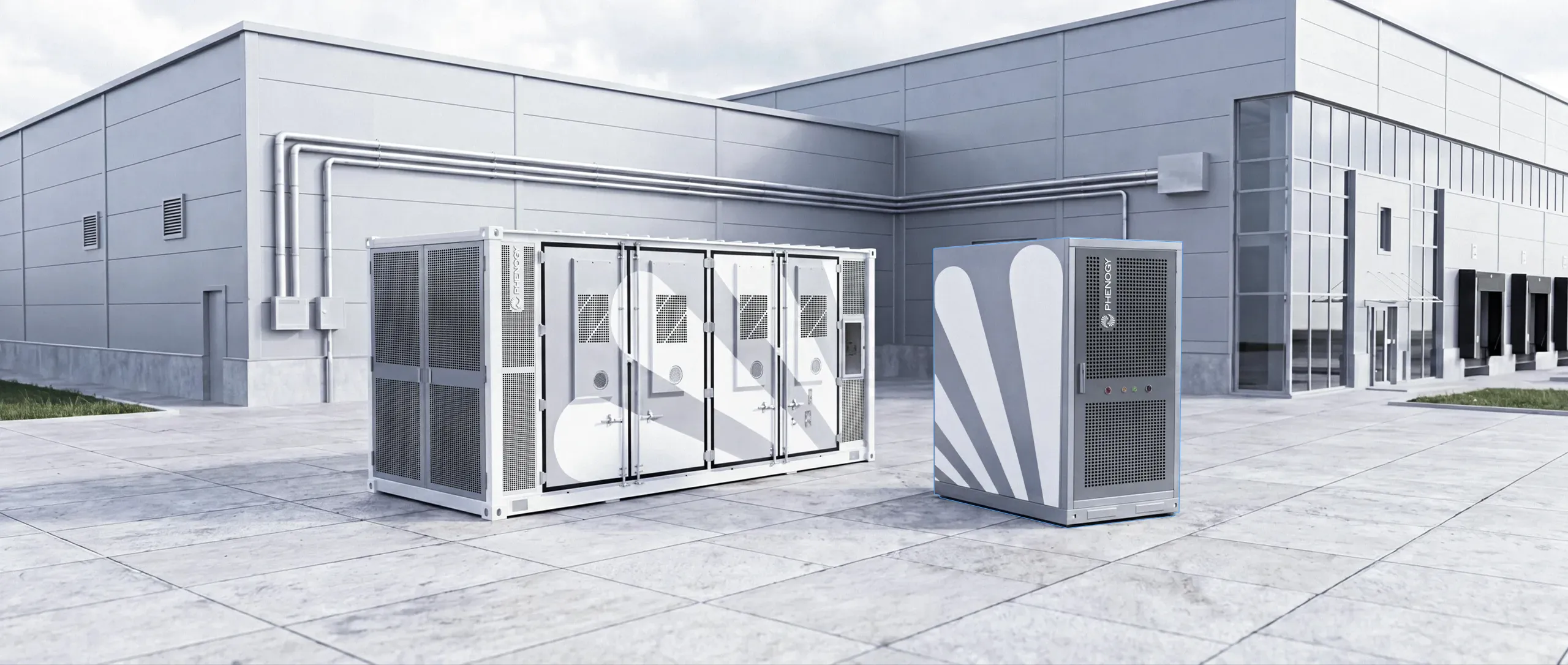
PHENOGY container and cabinet battery storage systems outside an industrial building
Article
Events & Awards
Sodium-Ion Technology
PHENOGY Series 1
14.07.2026

Smarter E AWARD: Why PHENOGY Became the First Sodium-Ion Winner

Innovative technology meets practicality for everyday use

Marcel Kloppenburg
Chief Marketing Officer

Your energy system starts here.

Fill in the form. Get your tailored system recommendation.

1. Personal Information
2. Project Details
Are one or more locations already designated for placing BESS (container/cabinet)? *
In what time frame are you aiming to implement the project? *
What economic advantage would you like to achieve with the battery energy storage solution? *
Thank you. Your request has been received and our team will be in touch shortly.
Something went wrong. Please try again.