Energy Density

Energy density indicates how much energy a battery can store relative to its weight (gravimetric, in Wh/kg) or its volume (volumetric, in Wh/l). For mobile applications like electric vehicles, gravimetric energy density matters most, while volumetric density matters more for space-constrained or stationary applications. Through active research, sodium-ion cells have now nearly caught up with lithium iron phosphate cells in gravimetric energy density, though the gap in volumetric density remains more pronounced for now.

Learn more

More on PHENOGY's sodium-ion technology

More on this topic

Technology & Safety

Battery Fire Safety

Battery fire safety encompasses all structural, technical, and organizational measures that minimize a battery storage system's fire risk and limit damage if…

Also:

Fire Protection Concept
Technology & Safety

Fire Safety Requirements (NFPA 855)

In the US, fire safety for battery storage systems is governed primarily by the NFPA 855 fire code and UL 9540A testing standard, which set requirements for…

Also:

NFPA 855, Fire Code Compliance
Technology & Safety

LFP (Lithium Iron Phosphate)

LFP (lithium iron phosphate) is a lithium-ion cell chemistry with iron phosphate as the cathode material and currently the most widely used chemistry in…

Also:

LiFePO4

Further reading

No items found.
Scaling Smarter: How PHENOGY Is Moving into Series Production
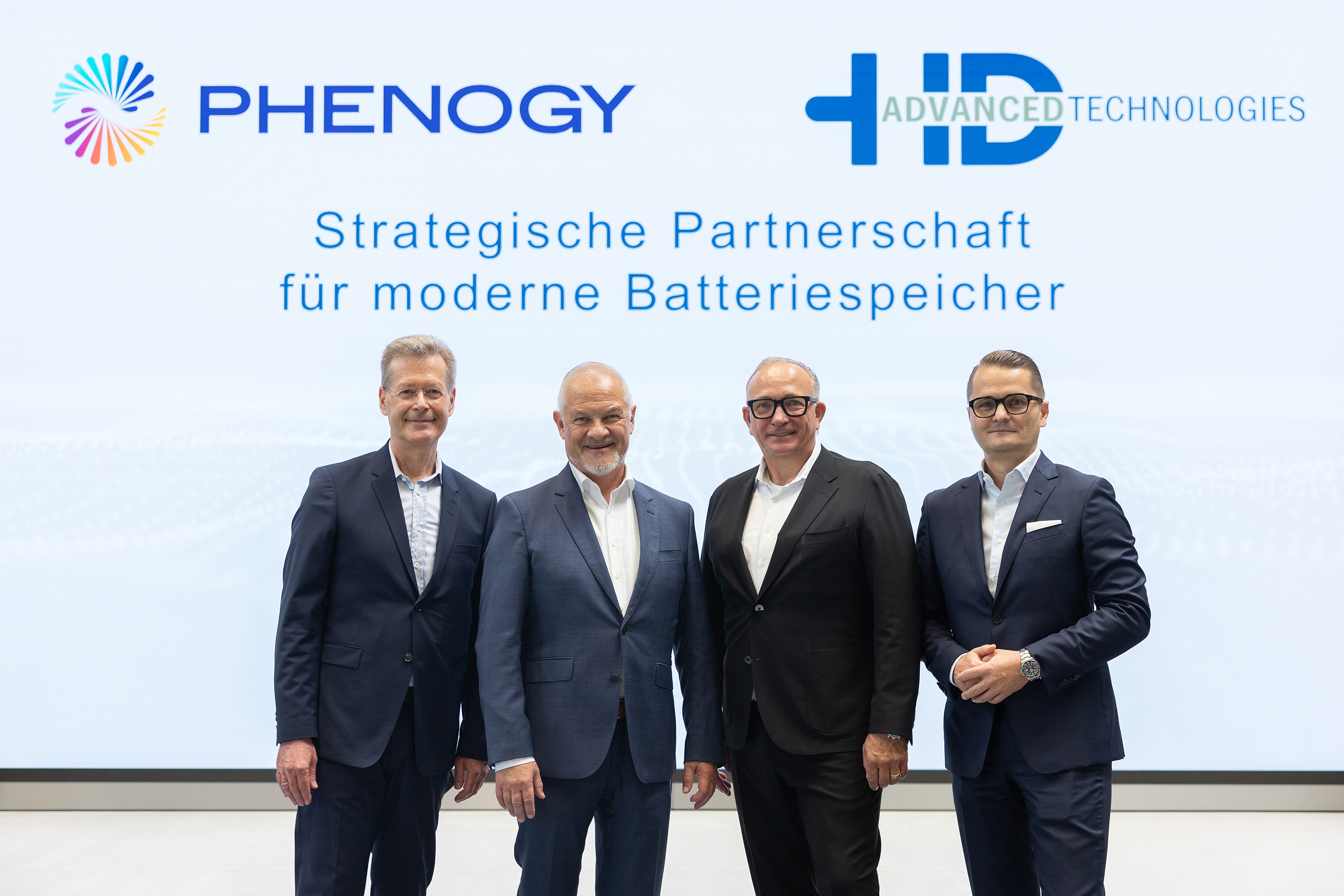
Representatives of PHENOGY and HDAT at the announcement of their strategic partnership for battery storage
Article
Energy Market & Policy
Company & Team
12.10.2026

Scaling Smarter: How PHENOGY Is Moving into Series Production

Together with our partner HDAT, we are bringing battery energy storage systems to market.

Marcel Kloppenburg
Chief Marketing Officer