Battery Management System (BMS)

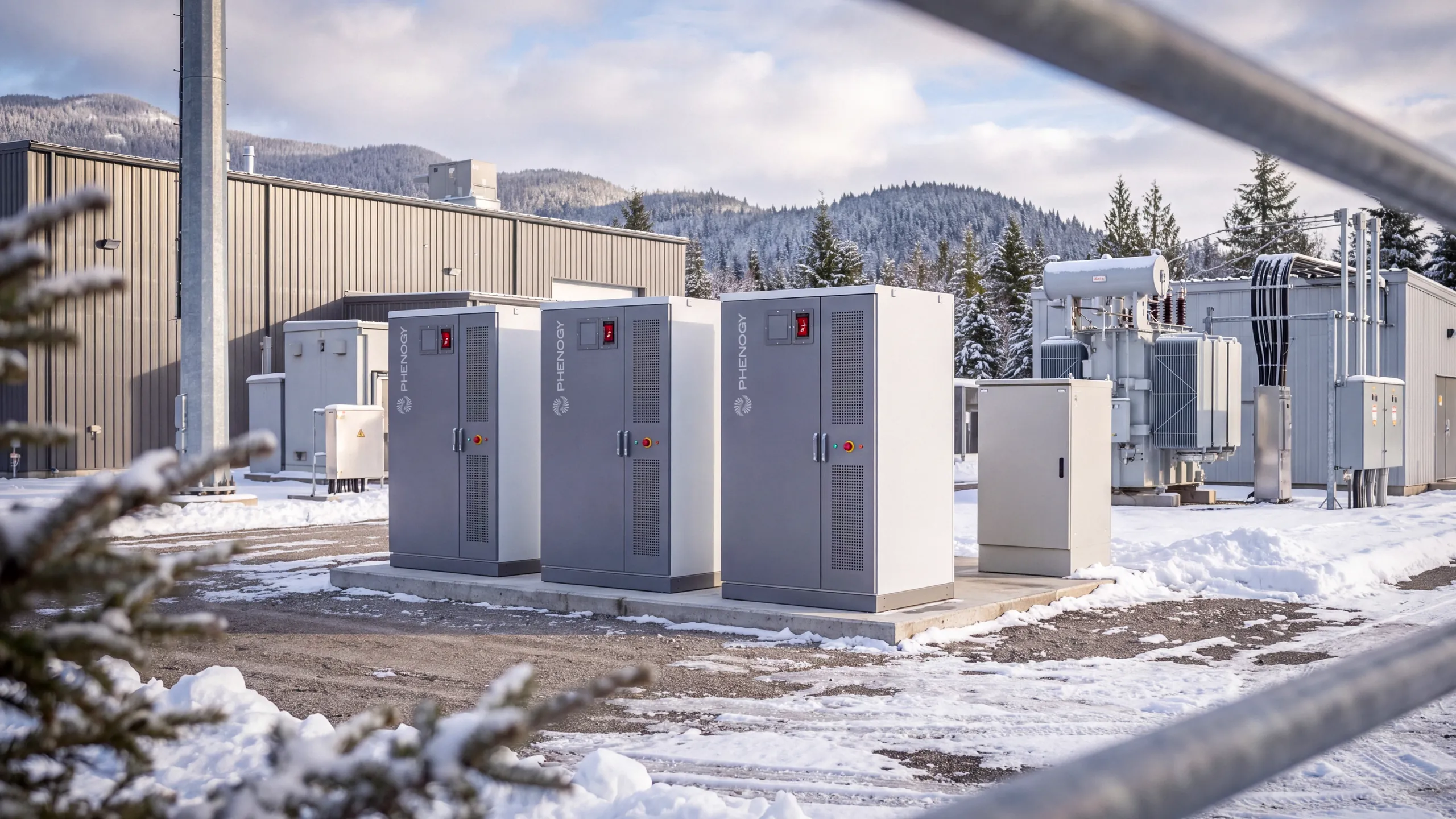
A battery management system (BMS) monitors and controls the state of individual battery cells, including charge level, temperature, and voltage, and protects them from overcharging, deep discharge, or overheating. Unlike an energy management system, which coordinates energy flows across an entire site, the BMS operates purely at the level of the battery itself. A reliable BMS contributes significantly to the safety and long lifespan of a battery storage system.

Learn more

More on safety and reliability at PHENOGY

More on this topic

Software & BMS

AI-Driven Energy Management

AI-driven energy management uses machine learning algorithms to automatically optimize a battery storage system's charging and discharging decisions.

Also:

AI Energy Management, Predictive Energy Management, Predictive Control
Software & BMS

Cycle Life

Cycle life indicates how many complete charge and discharge cycles a battery storage system can undergo before its capacity drops to a defined threshold…

Also:

Cycle Count, Cycle Lifespan
Software & BMS

Depth of Discharge (DoD)

Depth of discharge (DoD) indicates what percentage of a battery storage system's total capacity was actually used in a given cycle: discharging 90 kWh from a…

Also:

DoD

Further reading

No items found.
Scaling Smarter: How PHENOGY Is Moving into Series Production
Representatives of PHENOGY and HDAT at the announcement of their strategic partnership for battery storage
Article
Energy Market & Policy
Company & Team
12.10.2026

Scaling Smarter: How PHENOGY Is Moving into Series Production

Together with our partner HDAT, we are bringing battery energy storage systems to market.

Marcel Kloppenburg
Chief Marketing Officer