
European Flags in Brussels. Foto: Guillaume Périgois/unsplash
Europe’s Next Dependency Is Emerging Now. And We Are Watching It Happen.
European Flags in Brussels. Foto: Guillaume Périgois/unsplash
Why Europe must switch to crisis mode on battery storage - and why sodium-ion technology offers an industrial opportunity we should seize with determination.
This article was first published as a guest article on Nov 4th 2026 in pv magazine Deutschland (in German).
Europas nächste Abhängigkeit entsteht jetzt. Und wir schauen zu. - pv magazine Deutschland
Here's the translation:
Europe cannot afford its next strategic dependency. Yet we are on the verge of creating exactly that: in battery storage systems, without which our future electricity supply will not function. We debate kilowatt-hours, efficiencies, and acquisition costs. But the decisive question is this: who will control the technology, raw materials, and production capacity when we urgently need these storage systems?
With oil and gas, we have seen what happens when economic convenience replaces strategic judgment. Anyone driving Europe’s electrification without securing the industrial foundation behind it is simultaneously creating the next vulnerability.
Europe must switch to crisis mode today. We need decisions, investments, and implementation at a pace that matches technological progress. Otherwise, others will determine the terms of our energy future.
The Next Dependency Arrives with the Grid Connection
Battery storage systems are becoming a cornerstone of our energy supply. They make renewable electricity more usable, shift loads, relieve pressure on grids, and help secure industrial processes and critical infrastructure.
As deployment expands, so does Europe’s dependence on the supply chains behind it: cell materials, components, manufacturing equipment, software, and operational expertise. An installed battery alone does not create energy sovereignty. If spare parts, updates, or critical inputs depend on a small number of external suppliers, the system remains vulnerable.
For that reason, the cheapest storage solution may ultimately prove the most expensive. Its purchase price reveals little about the risks Europe assumes with it.
Europe Must Move Faster
Europe is competing with economic regions that treat technology, access to raw materials, financing, and industrial scale as interconnected sources of power. China is the clearest example: its high concentration of key battery value-chain activities gives the country a strong industrial and strategic position. Europe must respond with an equally determined strategy of its own.
This requires greater entrepreneurial courage: a willingness to take responsibility, commit capital, and make decisions under uncertainty. That applies to companies and investors just as much as to policymakers and public administration. Supply chains cannot be disentangled by decree, and industrial competitiveness does not arise through isolation. But complexity must not become an excuse for inaction.
Europe therefore needs a binding crisis-mode framework for strategic energy infrastructure: clear responsibilities, reliable decision timelines, parallelized approval processes, and financing capable of supporting the transition from pilot projects to mass production. Safety requirements must remain non-negotiable. Yet every avoidable delay carries economic and strategic costs.
We must move beyond national subsidy logic and location-based reflexes through cross-border industrial projects, shared priorities, and a market in which successful solutions can scale rapidly.
Sodium-Ion Technology: An Opportunity We Must Seize Industrially
Lithium-ion batteries will remain powerful and important for many applications. Nevertheless, Europe’s storage strategy requires a broader technological base.
We must also remain precise. Not every lithium-ion chemistry requires cobalt or nickel. Lithium iron phosphate batteries, which are widely used in stationary storage systems, require neither. The strategic vulnerability therefore also lies in the concentration of processing, components, and cell manufacturing. Simply changing cell chemistry does not eliminate it.
Sodium-ion technology opens up additional options. Sodium is widely available, and the technology requires no lithium. Especially for stationary applications, where space and weight matter less than they do in vehicles, it deserves a permanent place in Europe’s industrial strategy.
However, a different raw material does not automatically create a sovereign supply chain. Depending on the cell chemistry, other material dependencies remain, and industrial production of sodium-ion batteries is also heavily concentrated in China today. Europe must earn this independence through industrial development: creating suitable cell chemistries, building manufacturing expertise, and establishing resilient supply chains. Research must transition into production; pilot projects need customers; and companies need investment capital to scale.
“Made in Europe” Must Have Substance
An imported battery system does not become strategically European simply because its enclosure is assembled here. European value creation must occur at the decisive stages: materials and cell chemistry, cell and system design, control software, manufacturing, and quality assurance. In addition, there are installation, maintenance, spare parts, and the ability to operate systems independently throughout their entire lifecycle. This does not require complete self-sufficiency. Europe needs international partnerships, but it must be able to decide whom it works with and have alternatives if a partnership fails.
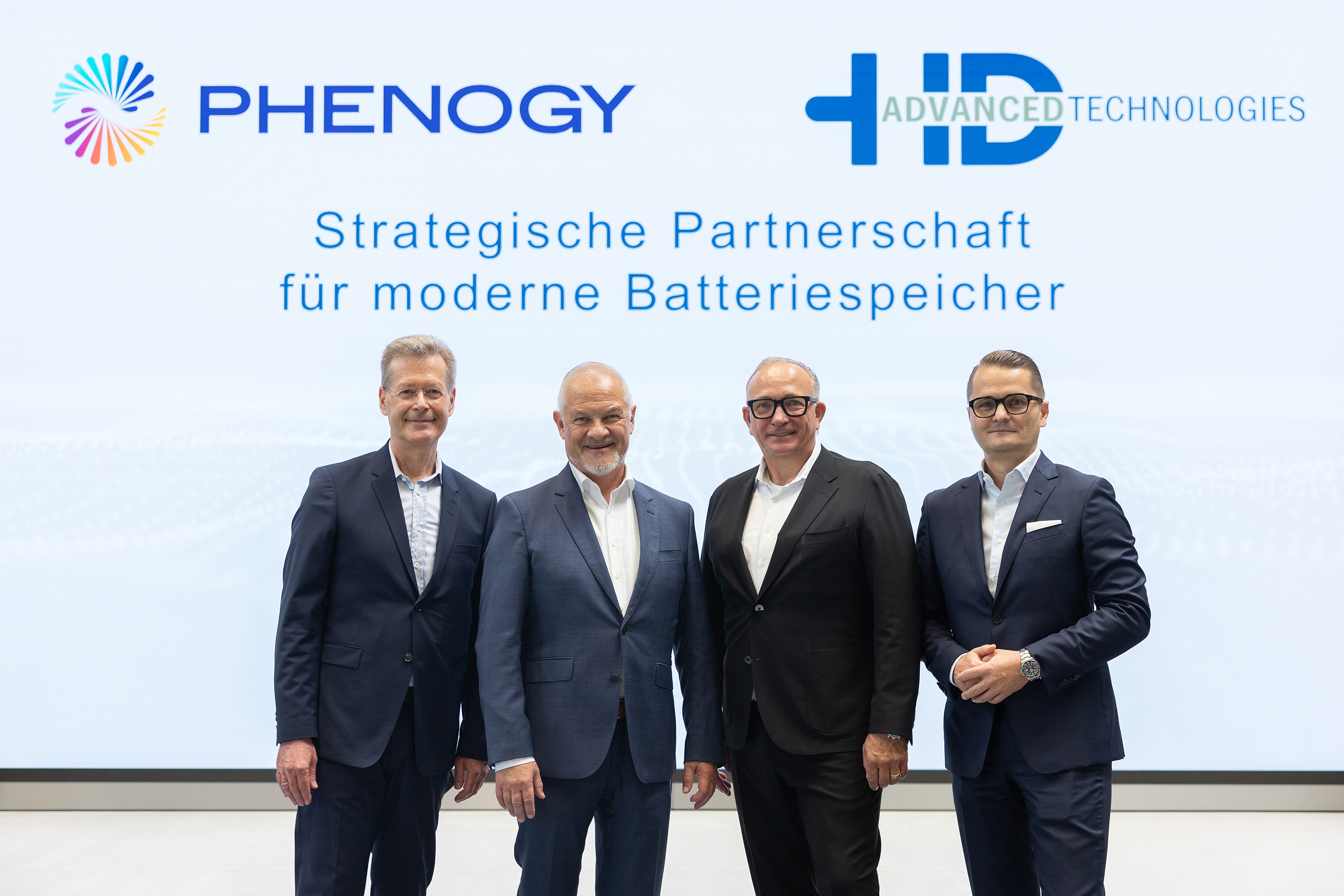
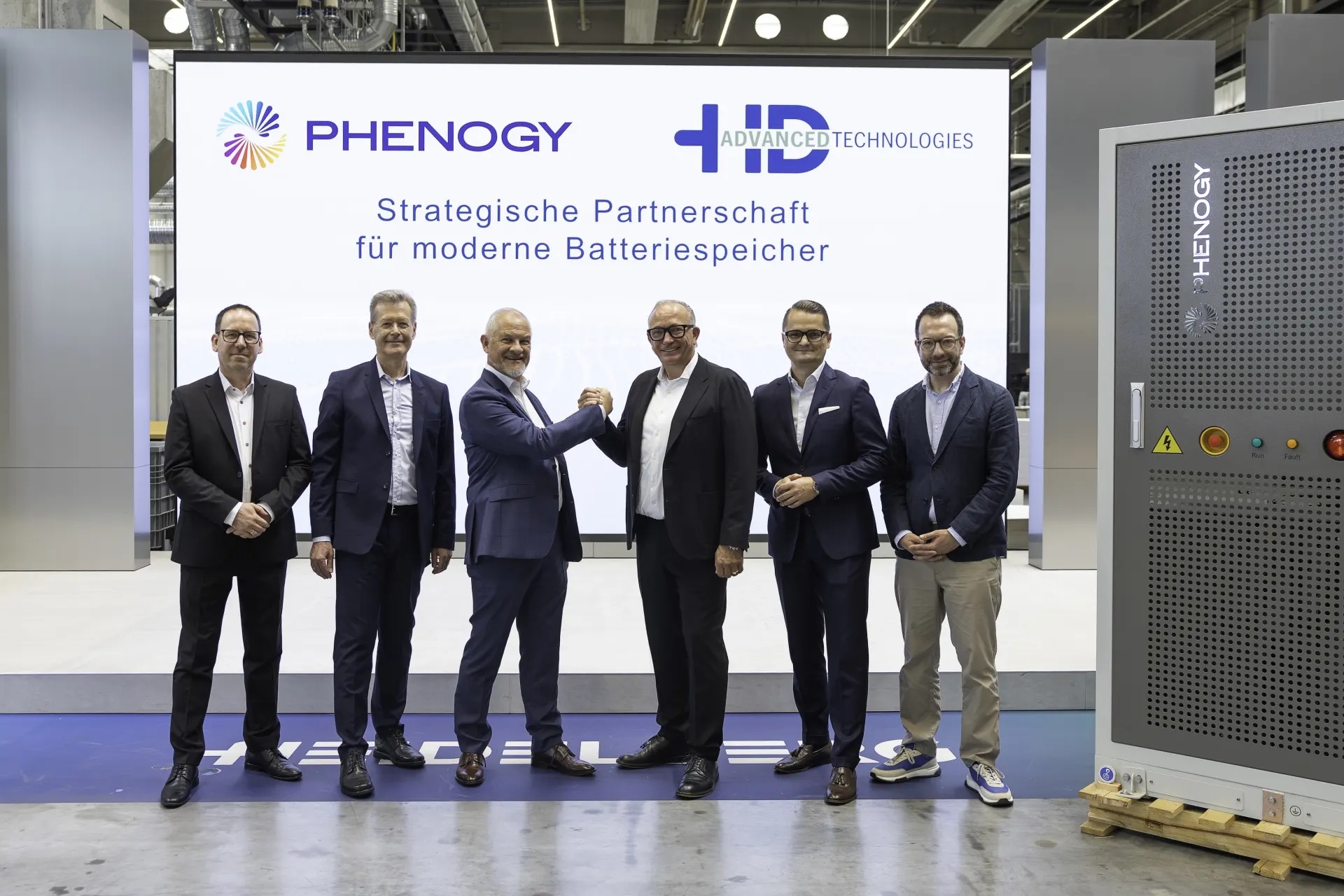
PHENOGY is contributing to this industrial build-up. The cabinets for its storage systems are manufactured by HD Advanced Technologies, a subsidiary of Heidelberger Druckmaschinen AG. This anchors a concrete part of production in Europe. A regional manufacturing stage does not replace a complete industrial base, but it can serve as a building block for further expertise, investment, and production capacity.
Public Funding Must Create the Ability to Act
Subsidy policy and public procurement will help determine the industrial base Europe possesses tomorrow. Anyone financing battery storage systems with public funds must evaluate more than acquisition costs: security of supply, traceable origin, operational and data sovereignty, maintainability, and the development of European expertise.
If funding programs primarily accelerate the sale of imported systems, they may reinforce exactly the dependencies Europe seeks to overcome. For this reason, clear criteria and reliable market conditions are needed. Companies invest in production capacity when they see demand and can rely on political commitments. Announcements alone do not build factories.
The private sector also has responsibilities. Anyone calling for European sovereignty must be prepared to invest, enter partnerships, and assume industrial responsibility. Sodium-ion technology offers the opportunity to expand Europe’s technological options and build new value creation. We can seize it only through capital, expertise, and determined execution.
Europe must decide what role it wants to play in the global energy-storage market: purchase systems, or develop technologies, scale production, and shape the conditions of its energy supply? The next dependency is emerging today. Our response cannot wait.
About the Author
Peter E. Braun, an aerospace engineer, always approaches challenges from a systems perspective. The serial entrepreneur is co-founder of PHENOGY AG. Founded in Switzerland in 2019 and headquartered in Root near Lucerne, the company develops battery storage systems based on sodium-ion technology, without lithium or cobalt and using widely available raw materials. In 2025, PHENOGY commissioned Europe’s first large-scale sodium-ion storage system in Bremen. PHENOGY advocates resilient European supply chains and a secure, sustainable energy supply.
More from the newsroom

PHENOGY in the Press: Resilient Energy for Armed Forces
Sodium-ion battery storage makes energy supply more resilient: robust in operation and at extreme temperatures, independent of vulnerable supply chains. The military benefits too: in our contribution to the "Future of Defence" supplement, we explain why the technology is ready for the field. The supplement was published in September 2026 in the Frankfurter Allgemeine Zeitung, one of Germany's leading national newspapers (in German).
Stay connected
with PHENOGY
Whether it’s insights into our solutions, industry updates, or event invitations, we’ll keep you informed.
Let us energize the future together.
Thank you for signing up.
Please confirm your subscription via the link in the email we’ve just sent you.