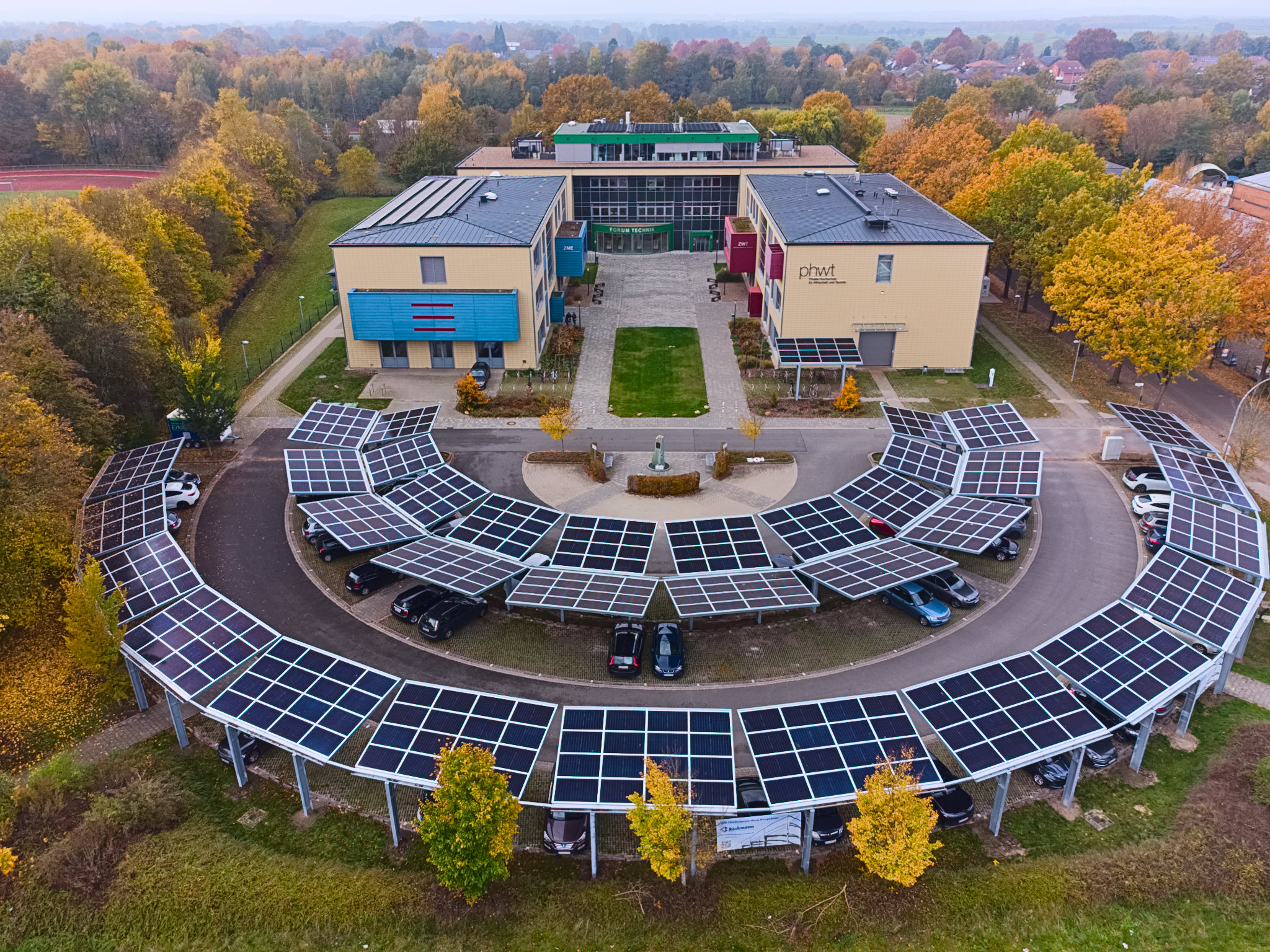
Private University of Applied Sciences for Business and Technology (PHWT), Diepholz campus, with the solar panels in the foreground. (Photo: PHWT)
“Battery storage lets us get more out of our solar power”
Private University of Applied Sciences for Business and Technology (PHWT), Diepholz campus, with the solar panels in the foreground. (Photo: PHWT)
Everyone complains about high electricity costs. This university is doing something about it.
The Private University of Applied Sciences for Business and Technology (PHWT), with campuses in Diepholz and Vechta (near Bremen) in northwestern Germany, promises its students a curriculum that keeps pace with the latest developments, whether they study business administration, mechatronics, or industrial engineering. The university applies the same standard to its own energy supply.
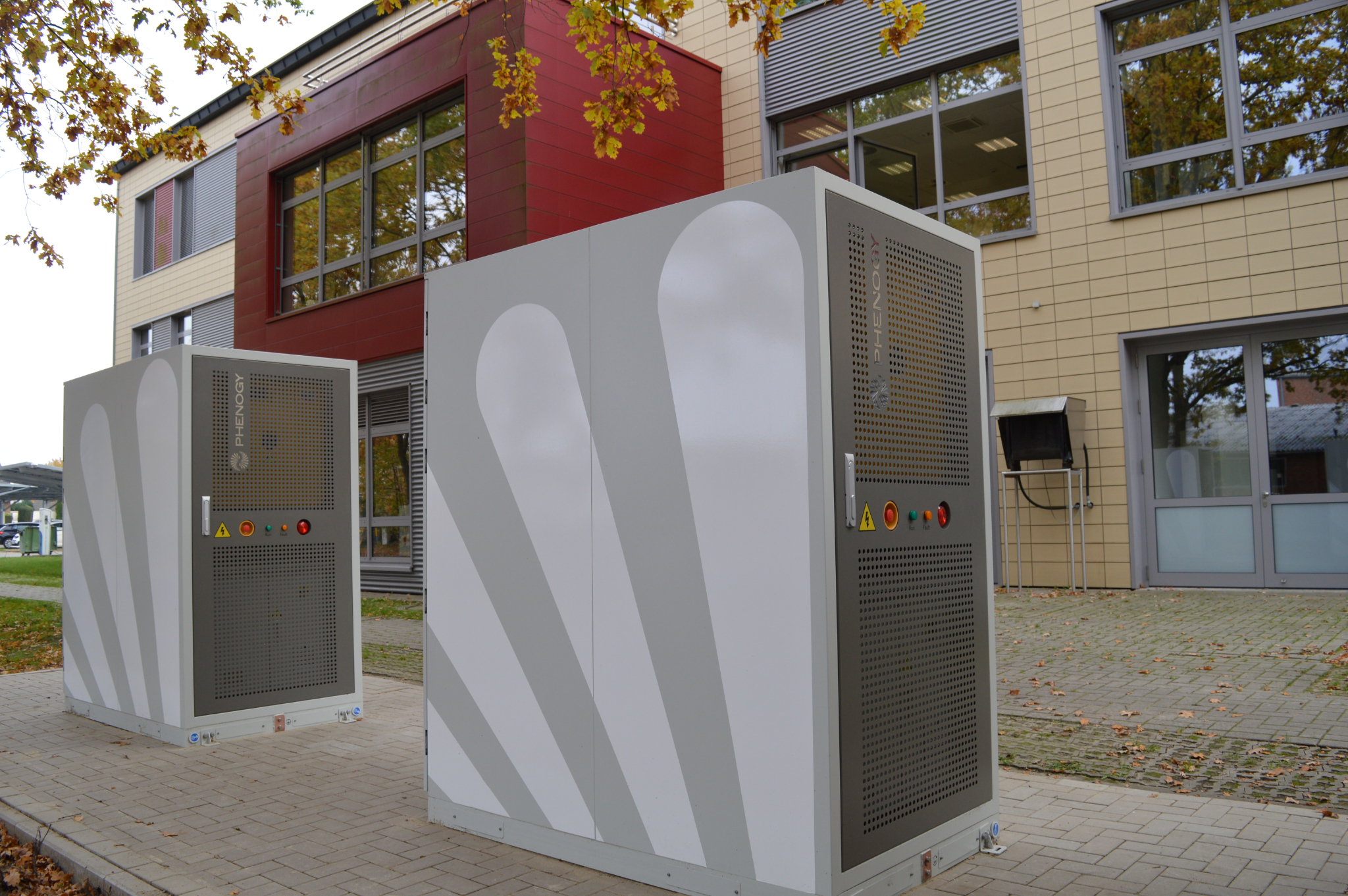
In November 2026, PHWT opened its new solar carport. Two PHENOGY sodium-ion battery cabinets store solar power whenever the panels produce more than the campus is using. They also absorb demand peaks from the labs. Both cut the university’s electricity bill. “As an innovative university, we teach students to work with the latest technology,” says PHWT President Prof. Dennis De. “We wanted our energy system to set an example, too.”
The project at a glance
- Battery storage: two PHENOGY sodium-ion cabinets with a combined capacity of 200 kWh and 100 kW of charging and discharging power
- Solar: around 237 kWp on the carport and a bike shelter
- Carport roof: around 12,400 square feet (1,150 square meters) of glass-glass modules
- Construction time: ten weeks during the semester break
High demand, steep peaks
PHWT uses its solar power in two main areas. One is a charging park for electric vehicles. The other is the wide range of machines and lab equipment that students use for coursework and research. Some of them draw a lot of power, and not evenly over the course of the day.
One example is the injection molding machine used to make plastic test specimens. When it runs, it causes steep demand peaks, and those are expensive: on top of the energy they use, customers pay charges based on their highest power draw. Cutting those peaks, known as peak shaving, brings costs down. “We estimate that peak shaving alone will save us €6,000 to €7,000 a year on electricity,” says PHWT controller Andreas Nipper. His takeaway: “Battery storage lets us get more out of our solar power.”

Turning the parking lot into a solar roof
PHWT’s building roofs aren’t suitable for solar panels. So the university turned to its parking lot instead, which comes with a twist: it’s laid out in a semicircle. German solar carport specialist PfefferKnecht designed a metal structure that follows the curve. The solar modules cover 90 parking spaces across around 12,400 square feet (1,150 square meters) and double as a watertight roof. Together with a bike shelter, the system has a capacity of around 237 kWp.
Power when it’s needed
Solar power comes with a familiar catch: the system produces most of its energy around midday. But the campus also needs electricity in the morning and evening, and demand peaks don’t follow the sun. Generation and consumption often happen at different times. Without storage, surplus solar power flows into the grid, while at other times the campus has to buy power from it.
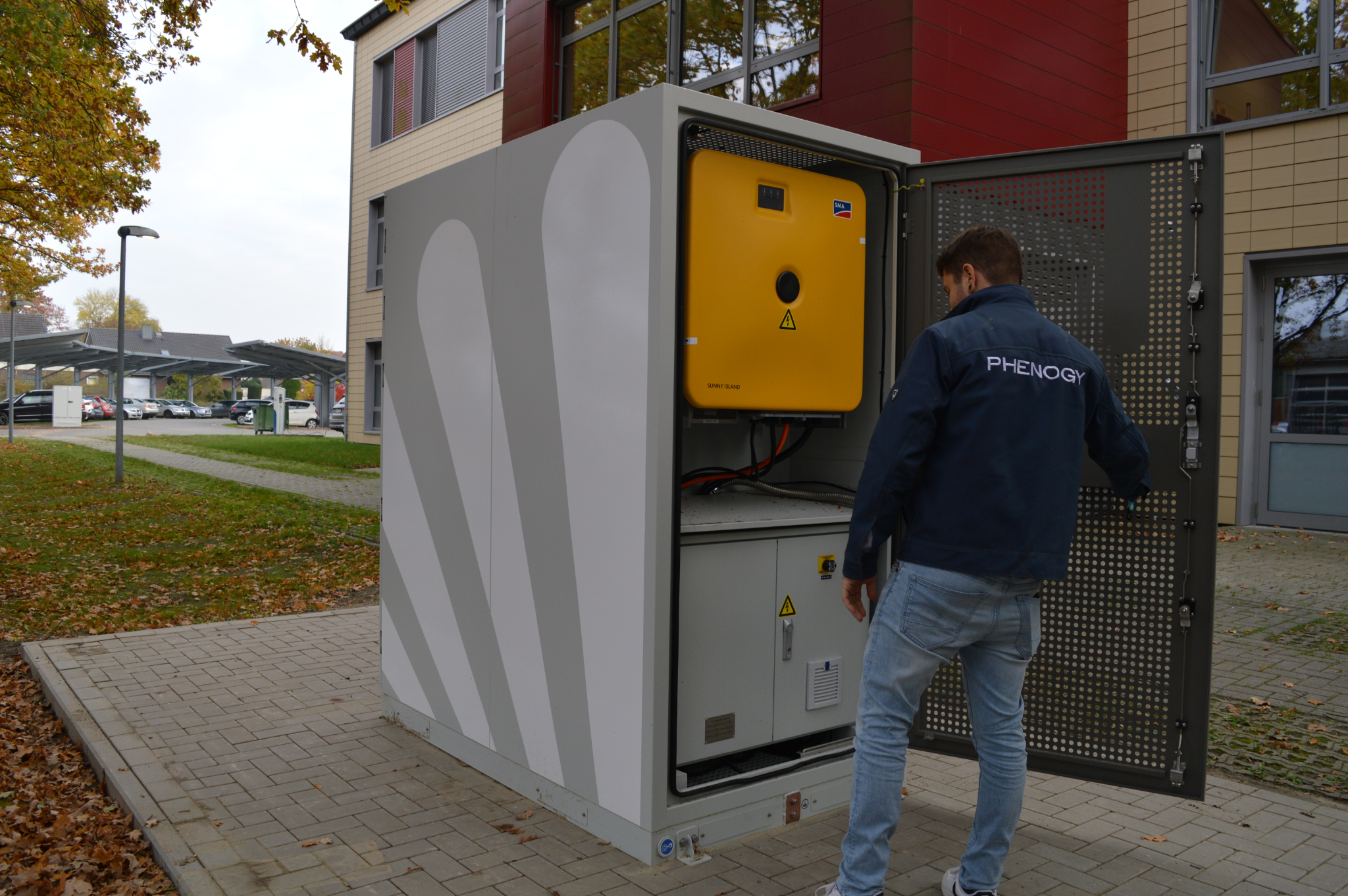
That’s what PHWT’s battery storage is for. When the solar panels produce more power than the campus is using, the battery charges. When demand rises, it releases that energy again. This lets PHWT use more of its own solar power. The battery also covers the demand peaks of the injection molding machine. PHENOGY’s energy management system automatically decides when the battery charges and discharges.
Why sodium-ion
Choosing sodium-ion storage was a deliberate decision. President De gives three reasons for it.
The first is raw materials. Lithium, graphite, and often cobalt are concentrated in a handful of producing countries, and in some regions, mining them is linked to human rights abuses and environmental damage. Sodium, by contrast, is the sixth most abundant element in the Earth’s crust and available worldwide.
The second is the temperature range. Lithium-ion cells are more sensitive to cold and heat, so they often need more complex thermal management. PHENOGY’s sodium-ion cells keep performing from −4 °F to 140 °F (−20 °C to 60 °C). Even at −4 °F (−20 °C), up to 90 percent of their capacity is still available.
Lessons from the racing team
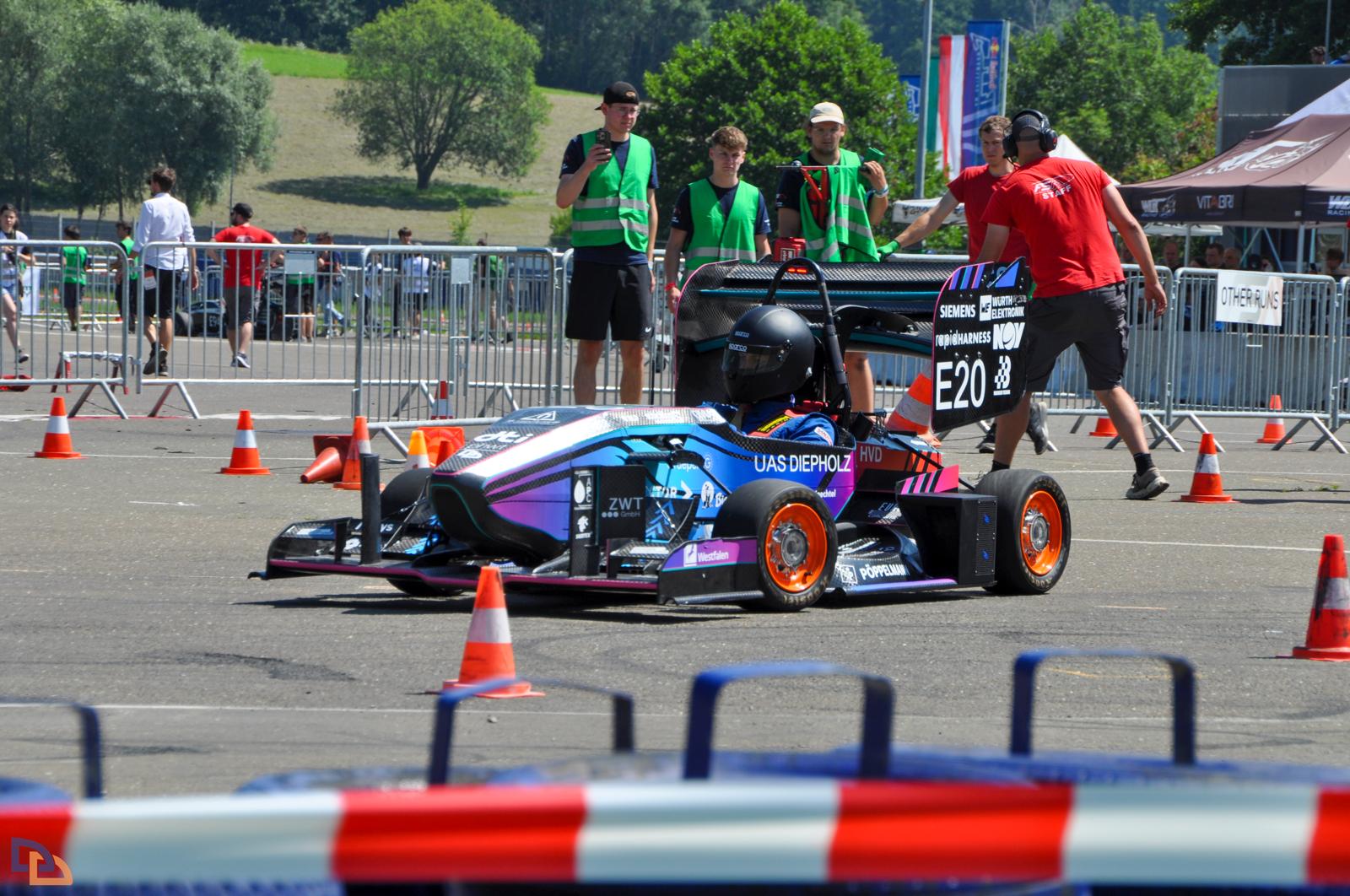
Prof. De knows the third reason from personal experience: safety. With its team Deefholt Dynamics, PHWT competes in Formula Student, an international engineering competition in which students build their own race cars, including electric ones. On two occasions, battery cells caught fire. Both times, the fire was quickly put out on site.
A race car battery is, of course, a different thing from a stationary storage system. But ever since, he has kept a close eye on the fire risk of lithium-ion cells. Current research shows that sodium-ion cells have higher thermal stability than lithium-ion cells. If a fault does occur, the reaction is less severe.
Part of a bigger energy picture
The battery storage system isn’t the first step PHWT has taken toward an innovative energy supply. The Diepholz campus is already heated and cooled by an ice storage system, a technology that is still rare. A heat pump draws heat for heating from a large water tank until the water freezes into ice, which is then used for cooling in summer.
PHWT keeps pace outside the classroom, too: its heat comes from ice, its electricity from the sun, and the battery makes sure that power is there whenever the campus needs it.
Find out more about the construction project in PHWT’s press release (in German).
Planning a similar project or wondering what battery storage could do at your site?
Get in touch: Contact PHENOGY

More from the newsroom


PHENOGY in the Press: Resilient Energy for Armed Forces
Sodium-ion battery storage makes energy supply more resilient: robust in operation and at extreme temperatures, independent of vulnerable supply chains. The military benefits too: in our contribution to the "Future of Defence" supplement, we explain why the technology is ready for the field. The supplement was published in September 2026 in the Frankfurter Allgemeine Zeitung, one of Germany's leading national newspapers (in German).
Stay connected
with PHENOGY
Whether it’s insights into our solutions, industry updates, or event invitations, we’ll keep you informed.
Let us energize the future together.
Thank you for signing up.
Please confirm your subscription via the link in the email we’ve just sent you.